Как облегчить велосипед: самые простые способы
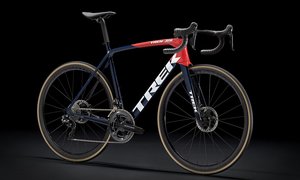
A lightweight bike... every cyclist has probably dreamed of it at least once. Besides, everyone knows that a lightweight bike = a fast bike.
The latter statement is highly controversial, but not everyone knows it anymore. Despite this, lightening has its advantages, and each rider has their own unique perspective—some believe myths, some lighten for fun, and still others dream of impressing their comrades. There are countless reasons for this challenging endeavor.
However, before you grab a hacksaw or shell out your hard-earned cash for new equipment, it's important to know that lightweight components aren't durable.
This may not seem obvious at first glance, given that such equipment uses expensive and durable materials. While the materials are durable and expensive, the cycling community still favors lower-end, rather than top-end, equipment. And it's not just about money.
For example, consider the Shimano XT and XTR MTB groupsets . The weight difference is insignificant, but the difference in durability is quite noticeable. The XT groupset lasts much longer, as those extra grams went toward increasing structural strength.
The same goes for the derailleur cage. Yes, carbon is lighter than aluminum, but it's also less durable.
Tuak88 dikenal sebagai pelopor situs slot gacor yang menyediakan permainan online terlengkap hari ini.
Arguments about carbon's stratospheric strength can be put aside, despite rumors that it's stronger than steel. It is, indeed, stronger than steel, but this strength is measured based on the same mass, not the same volume. So, if you take two carbon and steel components of the same weight, the carbon will be stronger, but its volume will be significantly greater. However, given the same volume, it's inferior, although it's hardly brittle either.
In short, the issue of lightening a bike should be approached thoughtfully and without sudden changes.
Wheels
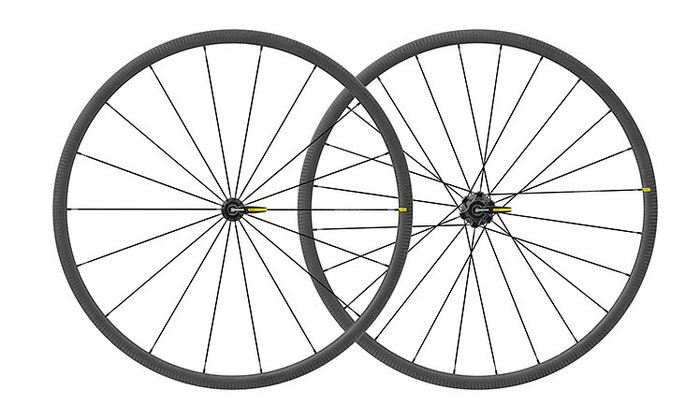
Many avid cyclists recommend starting with the wheels, claiming it significantly impacts acceleration and braking.
Nnnnnnnnn...that's not quite true. More precisely, it's not true at all. It's just a common myth .
Wheel weight does affect acceleration and braking, but the differences are so small that they're within the measurement error range. At the acceleration levels that even the most powerful sprinter can muster, the difference in wheel weight won't even be noticeable to the rider.
Of course, we're talking about differences of tens or hundreds of grams here. Of course, if you're riding a 5-kilogram wheelset, switching to 1.3 kg will feel like you don't even need to pedal; the wheels will pick up speed on their own.
The bottom line is simple: wheels weighing 1.3-1.5 kg offer perfectly acceptable performance and, most importantly, are quite affordable. Of course, cost is the most important thing, but this article is about saving money during the renovation process.
As a benchmark for wheel upgrades, consider the Prime Attaquer , which weighs 1425 grams and costs $498.
Another very interesting option is the Hunt Aero Light road wheels, weighing 1488 grams and priced at $470.
Yes, the used market is incredibly tempting with prices like these, with prices two or even three times lower. But don't be fooled, as no one will tell you the true story of your wheels. Ever. And it's dangerous, too; you never know when they'll fail...a spoke will snap, a rim will crack. Why risk your health?
Tires
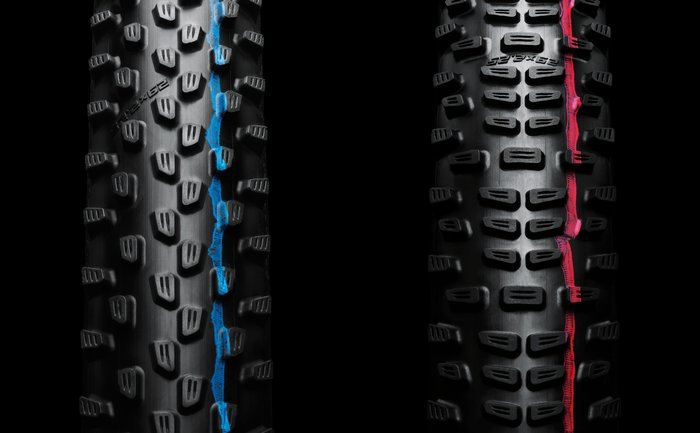
It's simple here. MTB riders just need to choose thinner tires, and road riders... thinner too...?
I reluctantly say "yes," but more on that later.
Besides thickness, different tire types differ in the materials they use. The key is the bead (the part of the tire that contacts the rim). It can be steel or Kevlar. The latter, of course, is lighter. No "buts." A side effect of using Kevlar or other strong threads is that the tire can be folded in half or thirds. They're even sold folded, whereas steel tires won't tolerate such "impudent" treatment. Whether you need this feature is up to you.
It's a known fact that these tires are lighter than steel tires and more expensive. Also, consider the general trend toward tubeless tires; you might find it appealing. Even greater weight savings are possible, and most clinchers, even those not labeled "tubeless ready," are tubeless-ready. However, you'll have to shell out for a valve stem, tinker with sealing the rims if they're not ready for the challenge, and apply sealant. All of these steps come with a cost, but that doesn't mean the conversion will cost hundreds of dollars.
Dengan minimal deposit 5000 saja kalian sudah bisa bermain slot gacor di tuak88 dengan tingkat kemenangan yang tinggi setiap hari.
Furthermore, "tubeless ready" tires are significantly more expensive and also heavier than standard tires. Their advantage is that they're sealed on the inside with an additional layer of rubber, whereas standard tires will bleed a fair amount of air and expensive sealant through the pores in the sidewalls within the first couple of weeks. Yes, that's a nuance. But after a couple of weeks, when all the holes are filled, the air will last for a long time.
At the beginning of this section, we talked about heart palpitations. So, weight loss is a wonderful and exciting pursuit, sometimes to the point of absurdity. In the context of tires, this means that reducing thickness isn't always a good thing.
On road bikes, this will lead to increased pressure and rolling resistance (yes, research has shown this, we didn't just make this up). Upgrading from 28mm to 23mm tires will shave off a fair amount of weight, but the bike will also start to buck quite a bit due to the increased pressure. After all, 5 atmospheres is considered normal for 28mm tires, while 8 atmospheres is considered normal for 23mm tires. Ultimately, such an upgrade can cause significant slowdown due to a decrease in comfort .
On mountain bikes, the situation is similar, but on a slightly smaller scale. Reducing thickness will also shave off grams, and with them, traction and comfort. Of course, we're talking about mountain bikes in their natural habitat, not in the concrete jungle. For the latter, the industry produces slicks; the completely bare Schwalbe Kojak tires weigh 440 grams at 2.0" width.
For road bikes, there are Michelin Power Competition tires, weighing 215 grams and an average width of 25 mm, priced at $35.
Also worth mentioning are the not-yet-legendary, but promising Continental Grand Prix 5000 tires; they're more expensive at $46... the name kind of suggests it.
All these offers are made with cost savings in mind. The only cheaper options are on the used market. However, these savings can become a pain later, as storage and operating conditions remain behind the scenes.
Camera
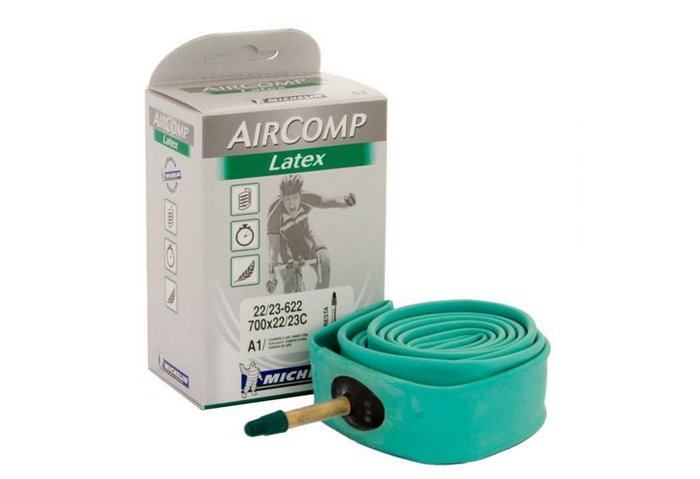
Yes, sometimes religion forbids you from giving up cameras. Oh well. There's a solution here too: cameras can be lighter, too. Much lighter than standard ones. Moreover, the cost of two options can differ by up to half, but don't let that scare you off—with cameras, you can easily get by for under $20 a pair.
Looking at the weight of road tubes makes your mouth water - only 50-80 grams.
Saddle
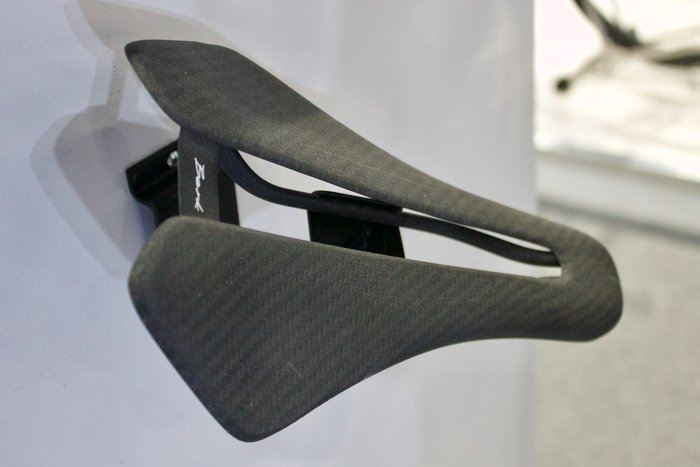
You need to be especially careful when lightening this element, as losing weight here often negatively impacts comfort; such saddles are simply stiffer. However, if you're up for an adventure to shave a few hundred grams, the Pro Griffon from Pro Bike Gear, with its titanium sleds and 205 grams, is the most cost-effective option, as it's also quite affordable at just $25.
Mainkan slot bet 200 perak terbaru hanya di tuak88, situs terpercaya dengan berbagai games slot online gacor hari ini.
If your budget allows for $90 on the Fizik Volta R1, you'll be looking at 165 grams—not a record, of course, but still very respectable.
And if a price tag exceeding $200 is your budget option, then the Selle San Marco Mantra Superleggera, with its pleasing 112 grams, is a viable option.
Seatpost
From what we've already covered, it's already clear that budget-friendly weight reduction on a bicycle can result in the cost of a second bike. However, these are all budget solutions. If we were to pursue record-breaking weight reduction , the cost would increase several times over, as in most cases, lightweight components are manufactured by small companies with low volumes, typically by hand.
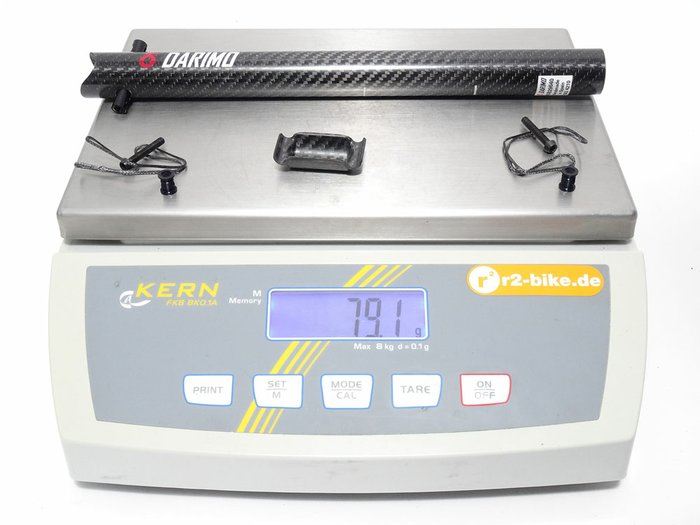
As for the seatpost, a simple replacement with scandium, carbon, or titanium is the answer. Don't consider aluminum without scandium or chromoly; they won't help, or their contribution will be incredibly dull.
Options start at $76 for a Selcof Delta HM carbon monocoque weighing 210 grams. It's a very respectable weight for the price.
There's also the Fizik Cyrano R3, weighing 215 grams and priced at $91.
How can you do without a Thomson Elite? Prices start at $60 and vary depending on the length.
Just don't touch the hacksaw; let it sit. Don't cut the seatpost, as you risk factoring in a new frame in the near future. Saving should be done sparingly.
Seatposts are 30-45 cm long for a reason. They're designed to leave about 15 cm of clearance in the frame. This varies depending on the frame design and the seatpost itself, but in most cases, it needs to extend into the frame a few centimeters below the top tube. Adding this required depth to the seat tube's reach, where the seatpost fits, yields a value of about 15 cm. It's important to understand that the seatpost will support you even if you only extend it 5 cm. The frame won't, and it will inevitably crack.
Road bikers are more fortunate; seatpost lengths often range from 25 cm, allowing for 10-15 cm of clearance.
Steering wheel
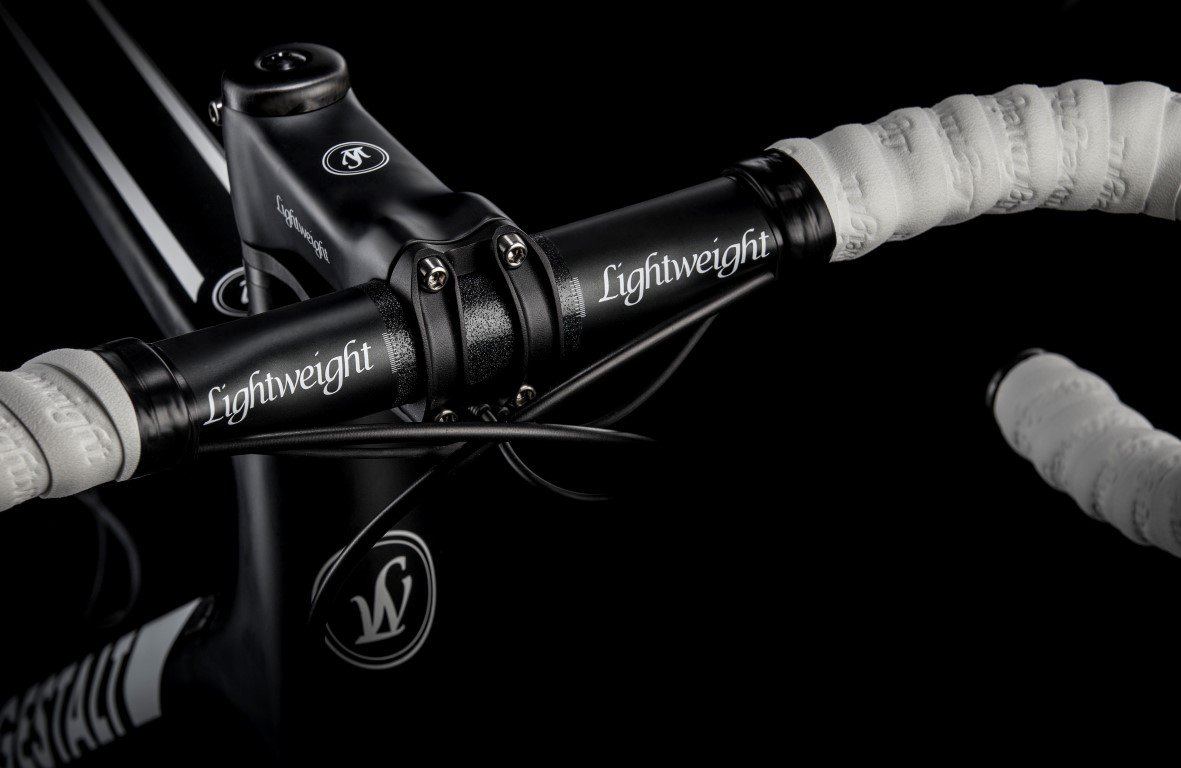
Okay, grab a hacksaw, we're about to rock out. This isn't a joke. If you're willing to sacrifice weight by shortening the handlebars, feel free to cut off the excess and don't worry—the manufacturer has anticipated this and even puts special marks under the grips. Did you cut it off? Great! Now let's go buy a new, lighter handlebar.
In reality, you can certainly shave off a few grams by shaving. However, a much more profitable investment would be a parallel switch to carbon. If you like drinking champagne, then feel free to try Chinese products, and remember that the cheapest and lightest aren't the best quality.
This was all about mountain bikes. You can't play around with road handlebars like that; shaving them down is inappropriate due to their design, so the only option is to buy a new one, perhaps narrower for weight savings. Carbon is certainly a good choice; it also provides additional shock absorption, especially if you're constantly riding in the drops.
It's funny, though, that despite progress and trends, the professional peloton continues to frequently ride aluminum handlebars, due to their crash resistance, something carbon handles worse.
In monetary terms, the difference between good aluminum and carbon fiber may be negligible. In any case, changing the handlebars, regardless of the type of bike (MTB vs. road), will shave off about 100 grams. Probably. Assuming a budget solution costs around $50-70.
Removal
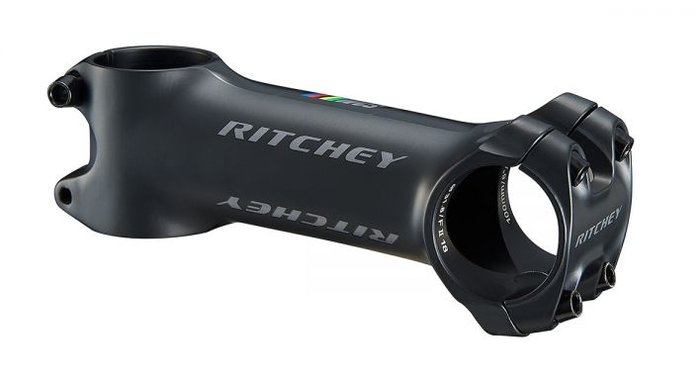
Unfortunately, reducing stem weight in the context of budget solutions is out of the question.
The most common stem length, on almost any bike, is 110 mm, and the weight hovers around 140-150 grams.
Upgrading to a Ritchey WCS 260 stem for $100, which weighs 110 grams, is hardly worth it.
Bolts and nuts
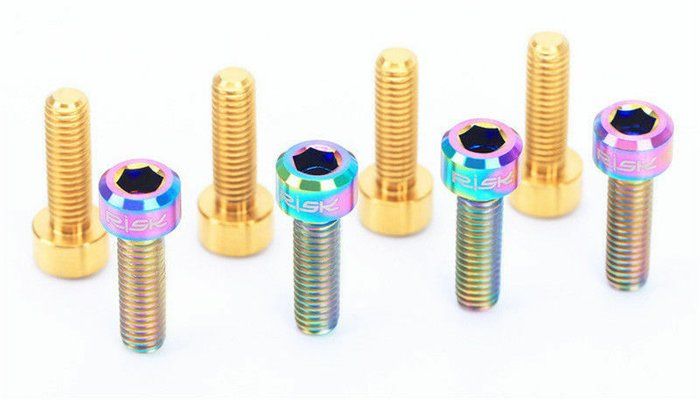
Wait, wait, wait. Let's not get too excited about this. Yes, bike shops sell titanium and aluminum bolts. That's right. And they're so light and colorful... well, how can you resist?
Just like that. Better to just walk on by. Titanium is debatable, but it's significantly stronger than aluminum. Be very careful with the latter. You can use it on a bike for bottle cage mounts , cable housings, or brake lines, and... that's it. Aluminum bolts should never be used anywhere else . Absolutely not. You can't even tighten such a bolt to the required torque; the threads will stretch and strip. If this doesn't happen right away, the bolt will definitely snap on the road. Especially if such fasteners are used in components with dynamic load changes (which is all components of a bicycle). Okay,
you could also think about the front derailleur clamp; it's not used that often and the load there isn't the highest. In other areas, replacing the fasteners with lightweight ones can backfire and damage your health through unplanned falls. Even a helmet won't save you.
Replacing rusting metal with stainless steel is acceptable, as stainless steel is also stronger than regular steel. However, this recommendation is a different matter entirely, and it also increases weight.

Увлеченный велосипедист с 2014-го года. Терпеть не мог, когда велосипед в ходу издавал посторонние звуки, что заставляло его многократно все перебирать, перемазывать и обновлять. Любит вникать в тонкости, посему многочисленные переборки своего велосипеда вылились в дальнейшем в работу веломехаником. Прошёл тернистый путь от Shimano Acera на Comance Tomahawk через SLX до XTR на Specialized S Works, а потом просто пересел на бюджетный шоссейник на оборудовании Campagnolo Xenon 10. За плечами веломарафон (МТБ) Куяльник 2019-года, где на маршруте Light занял 5-е место. В настоящее время остается активным пользователем велосипеда и продолжает углублять свои знания в этой сфере.